Category: Blog

  • New Website Launched for Synergy Solutions Group of Virginia

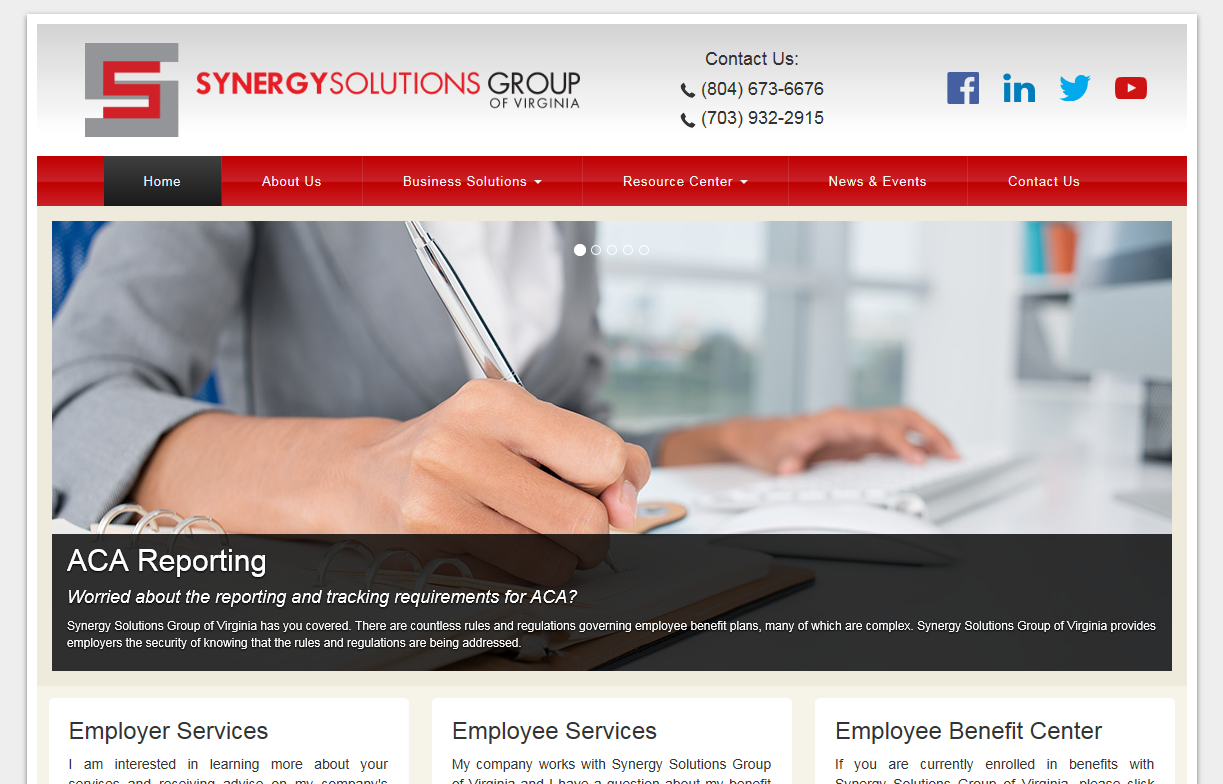
    Here is our latest website redesign, just launched for Synergy Solutions Group of Virginia.

    ssgva-large

    The new SSG website was recently launched with rotating home page images creating a professional, modern feel that is easy to navigate.  The site is mobile-responsive, clean and concise, and provides a one-stop resource for potential and current clients.

    Visit the new SSG site at http://synergysolutionsgroupofvirginia.com/.

  • 4 Easy Ways to Get More Out of LinkedIn | Employee Benefits Technology

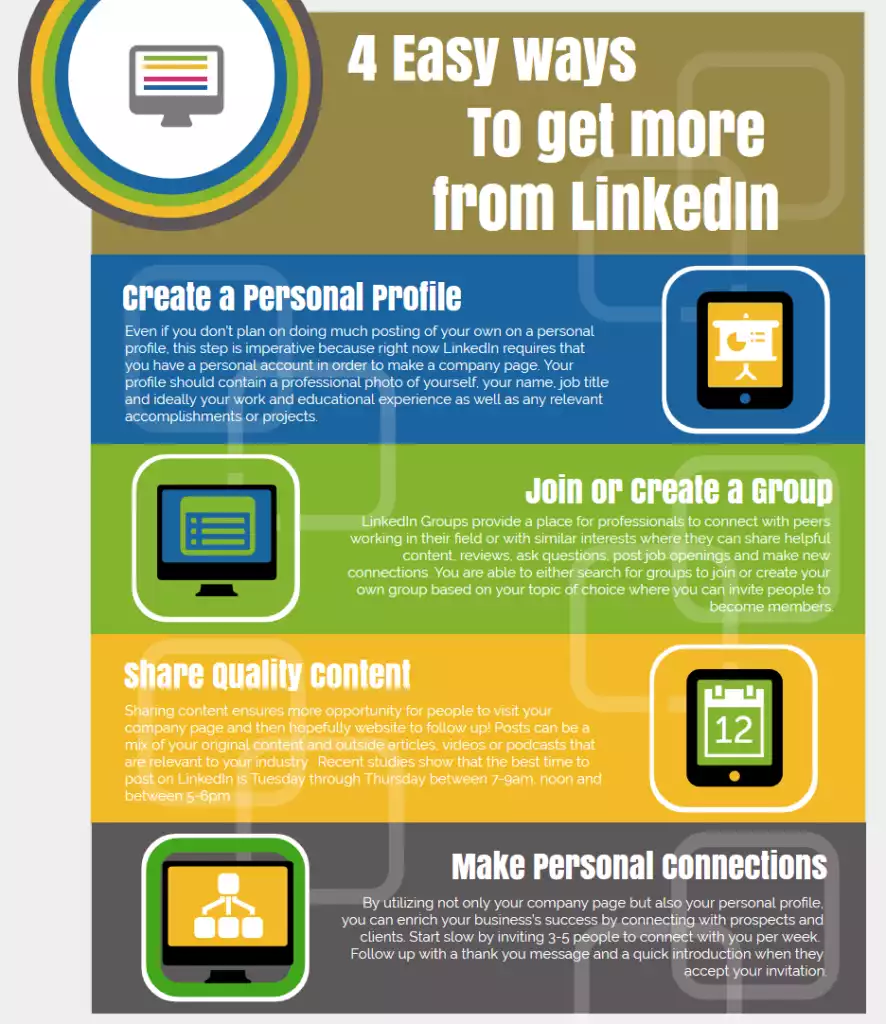
    As employee benefit agencies, we know it can be hard to figure out the best way to leverage social media for your company, so we’ve made it easy.  Follow these four steps to get more out of LinkedIn today!

    LinkedIn infographic


    Want to learn more? Go in depth with our post 5 Ways to Optimize LinkedIn for Your Benefit Agency.

  • How to Write an Engaging About Page for Your Website

    F7OLW2SG0CDoes your About page grab potential clients’ attention or does it leave them yawning? We’re sharing tips on tone, content and format for creating an engaging About page that will make people want to work with your agency today!

    Tone

    When a potential client reads your About page they should feel like they are meeting you face-to-face for the first time.  You have the chance to make a good impression by adopting a conversational and human tone while still communicating what makes your services unique and superior.  An easy way to do this is embrace the use of “I” and “we” rather than writing from a formal, third person perspective. Your tone should be authentic and relatable while remaining professional.

    Content

    What should you talk about? Focus on telling your story with simplicity rather than filling an About page with industry jargon or fluffy descriptions.  People want to know where you came from, what you can do for them and why you are a credible choice. Show that you understand your potential client’s challenges and use examples of things you’ve done in the past to let them know you can solve their problems.

    Finally, always include a call to action.  What do you want them to do next? Your goal with your About page should be to motivate potential clients to contact you about your services.  Place contact information visibly on the page. Include several ways to get in touch including a contact form, email, phone number and physical address.

    Format

    Your About page offers a glimpse into who you are as a company – your history, the principles by which you do business and the people who make up your team. It is your first chance to establish trust with a client by showing who the people behind the brand are.  Don’t be afraid to move away from the traditional corporate About page format and get a little creative with what makes your company unique. Include images of your team that put a face to the name.  We like what Brio Benefits has done to showcase their team by incorporating a corporate portrait and a funny, personable candid photo along with each employee bio.  To view their About page, click here.

    Think your About page needs a revamp?  Contact us today and we’ll get you started!

  • 5 Ways to Optimize LinkedIn for Your Benefit Agency

    9011116378_32e56983e3_c
    Photo by Sebastiaan ter Burg

    LinkedIn is fast proving to be the foremost social media site for B2B marketing. Employee benefit agencies that rely on cultivating relationships in order to market a product or service may find utilizing more fast-moving social platforms like Twitter or Instagram challenging, but LinkedIn provides a space for professionals to interact with one another, share original industry content and create brand awareness for their company that results in leads and network growth. We’ve put together a list of five simple ways you can start optimizing LinkedIn for your business today:

    1. Create a Personal Profile

    Even if you don’t plan on doing much posting of your own on a personal profile, this step is imperative because right now LinkedIn requires that you have a personal account in order to make a company page. Your profile should contain a professional photo of yourself, your name, job title and ideally your work and educational experience as well as any relevant accomplishments or projects.

    1. Set Up a Company Page

    Now that you’ve created your personal page, you are able to set up a page that specifically provides information about your company to LinkedIn users.  This page should contain your company name, logo, a link to your website, and a short description of your business that includes relevant keywords that are specific to what you do. Keywords can be in the form of phrases such as “Maryland insurance broker” but should shy away from staying as vague as “insurance company.” This helps your page receive a higher ranking in search engine results. Finally, ask employees who have personal LinkedIn profiles to list your company in their work experience, helping ensure that you can be found easily when people search for your business.

    1. Share Quality Content

    Sharing content ensures more opportunity for people to visit your company page and then hopefully website to follow up! Posts can be a mix of your original content and outside articles, videos or podcasts that are relevant to your industry.  Recent studies show that the best time to post on LinkedIn is Tuesday through Thursday between 7-9am, noon and between 5-6pm.  In addition, data revealed that posts made on Tuesday between 10-11am have the most clicks and shares. For best engagement results, companies should make it a priority to post on their LinkedIn page once a week, but no more than once a day.

    1. Join or Create a Group

    LinkedIn Groups provide a place for professionals to connect with peers working in their field or with similar interests where they can share helpful content, reviews, ask questions, post job openings and make new connections. You are able to either search for groups to join or create your own group based on your topic of choice where you can invite people to become members.  These groups are useful for connecting with prospects and establishing your company as an industry expert.

    1. Make Personal Connections

    By utilizing not only your company page but also your personal profile, you can enrich your business’s success by connecting with prospects and clients. Start slow by inviting 3-5 people to connect with you per week.  Follow up with a thank you message and a quick introduction when they accept your invitation.  Did you write a blog for your company or on an industry topic?  Post it to you profile. As you continue to share content, consider submitting it to LinkedIn Pulse’s editors to have your blog post featured.  This translates to much more visibility for your company! Finally, don’t be afraid to engage with others.  If you see content you like, write a comment or send a quick message to the author.  Other LinkedIn members are interested in the same thing you are – building mutually beneficial relationships!

    Generating brand awareness for your company on social media is becoming more and more important in our highly digitalized economy. LinkedIn offers the perfect space for your company using a B2B marketing model that is based largely on relationships to thrive and establish yourself as an industry expert while expanding your network of prospects and future business connections.

  • 3 Ways Social Media Helps Employee Benefits Firms

    MH46O0ISCFIn the world of employee benefits, we know that relationships are key. Particularly for independent firms, a new client is more likely to be obtained through a game of golf with a current client who knows local business owners than by a YouTube video explaining an online enrollment process. However, companies that do this type of B2B marketing can highly benefit from a robust social media presence, and we’re here to tell you how with three simple points:

    1. Increase Relational Reach

    Most professionals today have accounts on LinkedIn if not Facebook and Twitter. These three big social media channels offer a unique opportunity to nurture current business relationships and foster new ones. Becoming a part of industry groups on social media helps your business see who else is in your field with whom you could build partnerships or share services and keep up with what your current clients are doing both in business and in the community.  With private messaging, industry groups and platforms for public sharing, it’s easy to make initial and continuing points of contact with both current and prospective clients.  Don’t stop at just a business page – drive engagement by posting, sharing and connecting through your personal account and encourage your employees to do so as well – this adds an extra relational aspect to your brand which shows you personally care about your clients.

    1. Become Industry Experts

    One of the biggest things social media can do for your brand is add credibility as an industry expert through the content you post, thus giving you more opportunity to develop relationships with a larger pool of people. Start by creating a blog post a few times a month that educates about a unique service you offer or explains an aspect of employee benefits that is often confusing to clients. The key is to offer content that is engaging, educational and gives value to the reader – this should not be a sales pitch – quality content will bring a reader back for more. Share this post on your company and personal LinkedIn, Facebook and Twitter accounts and encourage employees to do the same. Reply to comments and shares with a personal note of thanks or a follow up question to foster engagement!

    1. Offer Creative Content

    We know it’s important to create original content, but what does that look like? Start with a blog. Write succinct posts about topics relevant to your industry, but don’t be afraid to think outside the box a little bit.  We all know employee benefits topics can get boring, but what about doing a profile on an employee who has benefited from a client’s wellness program that your firm set up?  People want to hear her story. As you get more comfortable, explore other mediums.  Share photos from company workshops or community events where you were participants or make a short video explaining a commonly misunderstood aspect of employee benefits packages. And don’t worry – if you don’t know where to start with creating content, there are companies to which you can outsource that will help you find the perfect way to share your story as an employee benefits broker.

    Social media is increasingly becoming a vital tool in how we do business in today’s economy.  By understanding and implementing these three concepts about how to use social media in the employee benefits field, you can expand your relational reach, establish your business as an industry expert and offer diverse creative content that sets your brand apart and generates client loyalty.

  • New Website Launched for GIA

    New Website Launched for GIA

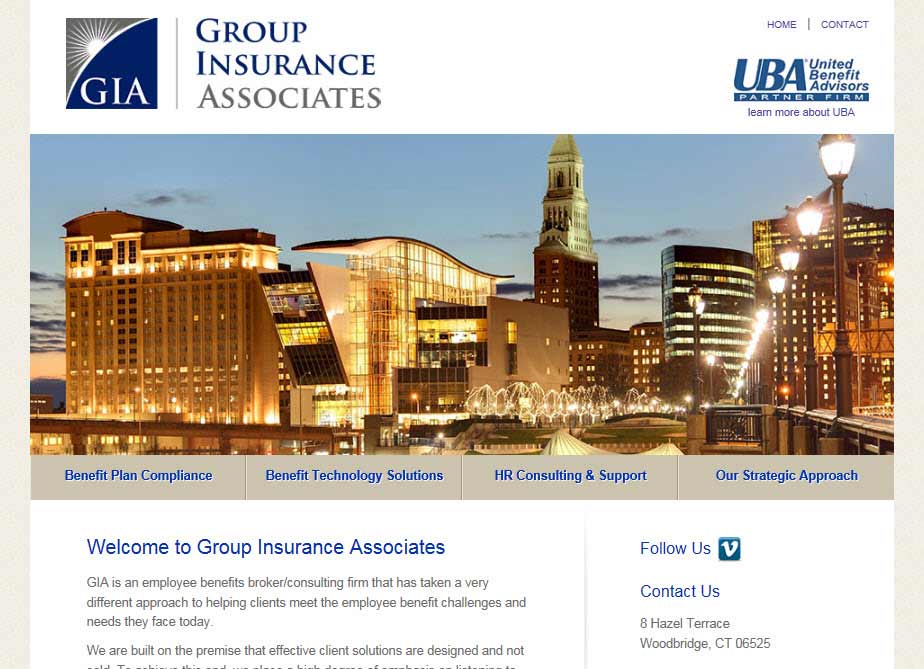
    Here is our latest website redesign, just launched for Group Insurance Associates.

    The Group Insurance Associates website was recently launched with unique animated videos custom-made for GIA embedded throughout the site.  We also embedded an HR360 login widget, link to a custom EBC demo, and UBA news feed. The site is mobile-responsive, easy to navigate, clean and concise, providing a one-stop resource for potential and current clients.

    Visit the new GIA site at http://gianow.com.

  • Why Is Social Media Important for Small Businesses?

    If you’re one of the few small businesses that are not yet plugged into social media, you may be wondering what all the fuss is about. Do you really need to use it, or can you just get by with an optimized website and an e-newsletter? The short answer is yes, you need social media – at least you do if you want to reach customers and stay competitive. Here are just a few reasons why social media is so important for small businesses.

    Your customers are already using it.

    According to a 2011 report published by Nielson, Americans spend nearly a quarter of their online time on social networks and blogs. This means that chances are much of your target market is already using social media. If you want to reach clients and prospects, you need to be where they are – by using social media you’ll increase the odds that your marketing message will get through to a significant number of them.

    It will give you a competitive advantage.

    Even though you may not be using social media, your competitors probably are. If that’s the case, you’ll want to add it to your marketing strategy ASAP, or risk falling behind. And if your competitors haven’t yet ventured into social media, rejoice – you can get a leg up on them by taking advantage of this marketing channel before they do.

    It will help you connect with your clients and prospects.

    Most marketing channels are one-way in nature – a business sends out its marketing message, and the consumer receives it. With social media, you can actually have a conversation. Social media helps to create a community of fans and followers that see you as more than just a business entity. They’ll view you as someone they trust, and people buy from those they trust.

    Social media isn’t just for the big boys – it’s a valuable marketing tool for small businesses, as well. It’s here to stay – at least for the foreseeable future – so take the leap and reap the many rewards it offers.

    Read More …

  • 5 Content Tips For Your Facebook Business Page

    How much time are you devoting to your Facebook business page? If it’s something you created awhile ago but don’t regularly review, you may be missing a valuable way to grow your business.

    Whether your goal is to boost sales, engage with current and prospective customers or simply build awareness of your brand—having a Facebook strategy in mind will enable you to use this immensely popular resource more effectively.

    Here are tips for generating content that gets Facebook users hooked and coming back for more:

    1. Offer value.

    Your Facebook page is a great venue for updates on your business, but don’t get carried away. People don’t want or need an in-depth report on your latest company picnic. Instead, offer greater value by combining a timely mix of content about your business (product tips, sales events, behind-the-scenes items and photos) with third-party content, such as links to industry blogs and forums. This builds your credibility as a resource of value to users.

    Try including a regular weekly or monthly feature, such as a “discount of the week” with a special offer on a product or service. Let fans know this is an ongoing feature, so they’ll come back next time as well.

    2. Be strategic with images.

    Don’t post stand-alone photos of your products or services. Show them being used by happy, satisfied customers. Also, make it easy for fans to tag photos of their own, wherever they use your product or service, and share these as well.

    3. Avoid lengthy posts.

    You might find every aspect of your business fascinating, but a long, rambling posts will never garner the likes, shares and comments you’re looking for. If you want fans to read your posts, keep them short and sweet, generally between 100-250 characters. (Even shorter posts of 60-80 characters are likely to be more easily absorbed by fans with rapid-fire attention spans.)

    4. Focus on engagement.

    How can you stimulate users to get involved with your business? Try asking questions and offering polls that invite a response. At the end of a post, remember to invite fans to comment, like or share. When people do respond, keep the conversation going with comments of your own.

    5. Connect like a friend, not a business.

    Facebook is all about the personal experience, so treating it simply as a promotional outlet will get you nowhere. Post news and updates in a simple, informal and fun way. No marketing hype or press release stuff!

    Facebook milestones are one area where a little self-promotion won’t hurt. When you hit 1,000 fans or get 100 or 200 likes for a post, share the news. This makes people feel they’re part of a growing community.

    Other content-related tips:

    Always link back to your business website and other social media accounts. This boosts your page’s search engine rankings, thus increasing your potential visibility with prospective customers.
    Scramble content between posts, videos, photos, contests, polls, etc. Keep things lively and unexpected!
    If you run into a dry spell, look to your archives for posts or fans’ comments that can be repurposed or given a new spin. Posts relating your business to pop cultural events are always a hit with Facebook users.

    By staying focused on a key principle—Facebook is less about marketing and sales and more about conversations and relationships—you’ll come up with plenty of ideas for content that builds a growing and enthusiastic group of followers.

    Read More …

  • 5 Key Benefits of Email Marketing

    Rockstar Technology is your business solution not only for email marketing campaigns but all social media and website needs as well!  Contact us today to discuss optimizing your online presence today!

    With the overwhelming breakthrough of social media, search engine optimization and mobile marketing, it’s safe to say email marketing is on the verge of death, right? Wrong. Email marketing is alive and well, and it’s arguably the most profitable means of marketing. Here’s why:

    Email marketing presents more opportunities for your business and drives a better return on investment. With email marketing, your business can create deeper relationships with a wider audience at a fraction of the cost of traditional media.

    1. Email Marketing is Targeted

    Email marketing solves all the inherent problems of non-targeted marketing. Gone are the days of placing an advertisement on television, on a diner placemat, or in a periodical with no control of who will see it. With email marketing, you have the ability to control exactly who sees an email by segmenting your contacts based on their lead status, demographics, location or any other data. Targeting emails ensures that your audience receives content suited specifically to his/her needs. Email marketing makes it simple to customize your message for each customer, fostering a higher conversion rate.

    2. Email Marketing Increases Brand Awareness

    With each email sent, consumers are exposed to your business and your brand. With strategic planning, smart design and targeted content, your business will consistently build value. In doing so, you stay top-of-mind with your audience. Then, when a customer needs products or services, your business stands a much better chance of turning those leads into clients and clients into loyal customers.

    3. Email Marketing is Easily Shareable.

    There aren’t many forms of marketing as easy to share as email marketing. With the simple click of the forward button, subscribers can share your deals, offers and news with their friends. Subscribers who share your emails are acting as brand advocates. Therefore, when a subscriber shares an email with friends, your brand gains more exposure and credibility.

    4. Email Marketing is Measurable

    Analytics are indispensable to measuring the success of any campaign. Many marketing channels present ambiguous and estimated results. Email marketing, on the other hand, draws precise and valuable metrics, including delivery rates, open rates, click-to-deliver rates and subscriber retention rates. Even better: these metrics are more than just numbers and percentages. They are insights about your customers behaviors and interests. Use your email marketing campaign as a tool to monitor which information your consumers are most responsive to. From there, you can further target your marketing strategy towards more successful campaigns and topics of interest.

    5. Email Marketing is Cost effective.

    Perhaps the most appealing advantage of email marketing is the return on investment. No print costs, no postage fees, no advertising rates. Email marketing is as affordable as marketing gets. According to the Direct Marketing Association, email marketing brings in $40 for every $1 spend, outperforming search, display and social marketing.

    We Can Help!

    In today’s ever-changing digital world, email marketing tends to take a backseat. However, if you haven’t considered email marketing for your business already, now is the time. Email marketing is a targeted, shareable, credible, measurable, and cost-effective tool overlooked by many. Working with a trusted marketing advisor makes the process simple and cost-effective. With a strategic approach, proper guidance and a strong message, your business is sure to benefit from email marketing.

    Source

  • 4 Reasons Why Blogging is Important for your Business

    There is some debate out there as to whether blogging is still relevant in today’s social media marketing environment.

    Regardless if you are a small business, or a multinational company, blogging is integral to your online content marketing strategy.

    Here are 4 reasons you need to blog:

    1.  Drive traffic to your website

    2.  Increase your SEO/ SERP

    3.  Position your brand as an industry leader

    4.  Develop better customer relationships

    Drive traffic to your website:

    Your blog gives you the opportunity to create relevant content for your customers. Use this as a marketing tactic to drive traffic back to your website.

    Make the blog on your website the foundation for all of your social media platforms.

    Your business might be on Facebook, Twitter, Pinterest, LinkedIn, or anywhere else. Post links  – with relevant visuals – of your blog articles to your social sites. Give your social followers a reason to click through to your website.

    Additionally, post inbound links directly in your blog articles, to drive traffic to specific landing pages of your website.

    Increase your SEO/ SERP:

    Blogs increase your SEO. Fresh content is still a key to beating out your competitors in the search engine results page.

    Use keywords in your articles. List out the keywords, topics, and categories you want your business to be found with. Use these words, and related expressions when writing your posts.

    Of course, whether you actively seek these out or not, blogging regularly about your business, industry, product or customer lifestyle will naturally increase your search keywords. Being intent about your words will only increase results.

    Keywords and topics on your website are a significant way in which Google (and other search engines) find your site for these searched words.

    Position your brand as an industry leader:

    Well written articles demonstrate your company as an industry leader. By posting topics which resonate with your market and show your knowledge, you are marketing your skills for your business, service or product too.

    If you are a retailer, for example, write blog posts about your products. Your customers will get to know you as the knowledge source for the products they want.

    If you are in B2B, post articulate, well researched articles about your service. Become the hub, or the place to be, for your industry.

    You are building trust, too. The more you can show that you are well-versed in your field, the more likely your consumer will trust you to supply what they need.

    Your customers additionally benefit from the learning you provide them.

    Develop better customer relationships:

    Blogs provide another source to deepen the connection with your customer. By connecting directly on your website, your clients are able to get to know your business or product from the comfort of your online home base.

    Use this. Again, build trust by being a source of information. Consumers like to be informed, and appreciate that you are the one teaching them.

    Additionally, just as on your other social sites, respond to comments and interact with your consumer. If they have questions about a product you are writing about, respond to them directly on your website. Unlike many social sites, a blog is generally searchable on your site for some time. Your website comments last longer than on a Twitter response or Facebook post. Other customers will see your interactions too.

    Source: Wishpond
    Written by: Krista Bunskoek, PR and Content Marketer @ Wishpond